
Stopping Leaks Before Damage Spreads
Roof repair services in Freeport for homes experiencing active leaks, missing shingles after wind events, or localized storm damage
A small roof leak during a rainstorm may seem minor until you trace the water path through the attic, along rafters, and into insulation where mold begins growing within 48 hours. TLC Contracting Group handles roof repairs across Freeport, addressing everything from isolated shingle replacement after wind damage to flashing repairs around chimneys and skylights where sealant has failed. You need fast identification of the failure point because water rarely enters the living space directly below the roof damage—it travels along sheathing or framing before dripping onto ceilings, making the source difficult to locate without attic access and knowledge of how water moves through roof assemblies.
The repair process starts with identifying the entry point, which may involve removing shingles around the suspected area to inspect underlayment and sheathing for rot or gaps. Once located, damaged materials are removed, sheathing is replaced if moisture has caused deterioration, and new underlayment and shingles are integrated with the surrounding roof surface. Flashing repairs require removing sealant or mortar, repositioning metal components to direct water correctly, and resealing joints to prevent future intrusion. In northern Illinois, freeze-thaw cycles often cause flashing to separate from masonry or siding as materials expand and contract at different rates.
Call for a repair assessment if you've noticed ceiling stains, attic moisture, or missing shingles after recent storms.
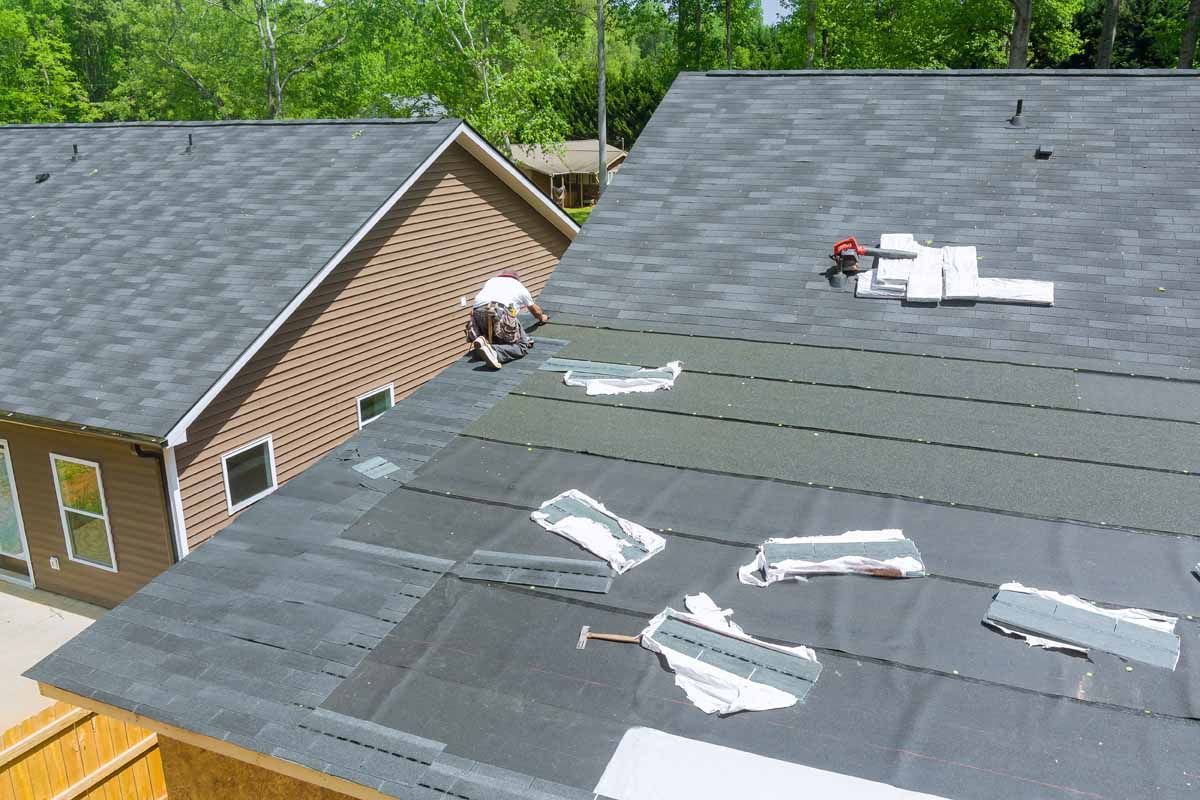
What Roof Repairs Actually Accomplish
Repairs restore the roof's ability to shed water without allowing it to penetrate the building envelope, which stops the progression of damage from the roof deck into insulation, framing, and interior finishes. When done correctly, the repair integrates with existing materials so water flows over the patched area just as it does over undamaged sections—no pooling, no gaps where wind-driven rain can enter.
After the work is complete, you'll see that ceiling stains stop expanding, attic insulation dries out and no longer smells musty, and the drip that appeared during heavy rain no longer occurs. Shingles around the repair lie flat and match the surrounding area in color and texture, assuming materials of similar age are available. If the original shingles are discontinued or significantly weathered, the repair may show some color variation even when installed correctly.
Not all roof damage justifies full replacement, but repairs only extend the system's life if the majority of the roof remains structurally sound and the repair addresses the actual failure point rather than just the visible symptom. If multiple leaks appear across different roof sections within a short period, the entire system may be nearing the end of its functional life, and continued repairs become less cost-effective than replacement.
What Property Owners Usually Ask
Homeowners dealing with roof leaks or storm damage in Freeport often need guidance on urgency, cost factors, and when repairs make sense versus replacement.
- What causes a roof leak to appear far from the actual damage point? Water enters through a gap in shingles or flashing, then travels along the underlayment or roof deck following the slope until it finds a seam or nail hole where it drips into the attic—sometimes several feet away from the entry point.
- How quickly does roof damage need to be repaired after a storm? Exposed sheathing absorbs moisture within hours, and delaying repairs allows water to saturate insulation and framing, which increases repair costs and creates conditions for mold growth.
- What affects the cost of a roof repair? The extent of sheathing damage, accessibility of the failure point, whether flashing or only shingles need replacement, and the availability of matching materials all influence total repair cost.
- When should missing shingles be replaced even if no leak is visible inside? Wind can lift shingles without immediate water intrusion, but the exposed underlayment degrades quickly under UV exposure, and the next rain event will likely penetrate once that barrier fails.
- Why do some repairs fail within a year or two? Repairs that don't address underlying ventilation problems, use incompatible sealants, or fail to replace deteriorated sheathing treat the symptom rather than the cause, and the failure recurs once weather stresses the compromised area again.
TLC Contracting Group responds quickly to roof repair needs across Freeport, prioritizing situations where active leaks threaten interior damage or structural integrity. Request a service call to inspect damage, identify the failure point, and receive a detailed repair plan that addresses both the immediate issue and any underlying conditions contributing to the problem.